VIP member
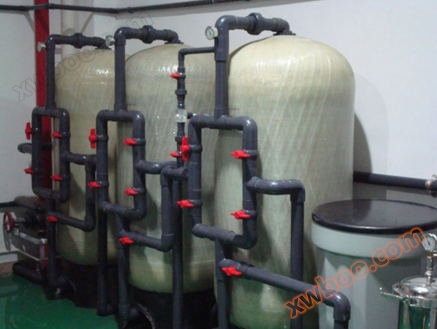
3x2T/h softened water system for production water in Shuihou Town, Anqing City
Overview of softened water: Natural water, whether groundwater or surface water, usually contains calcium, magnesium, and salt, which are the main sub
Product details
Overview of softened water:
Natural water, whether groundwater or surface water, usually contains calcium, magnesium, and salt, which are the main substances causing boiler scaling. In order to ensure the safe operation of boilers, it is necessary to remove calcium, magnesium, and salt from the water before they enter the boiler.
The hardness of water refers to the content of salt substances dissolved in water, that is, the amount of calcium salts and magnesium salts. The sum of calcium and magnesium ions is equivalent to10 milliliters of calcium chloride is called 1 (degree), usually divided into hard water and soft water according to the hardness. Water below 8 degrees is soft water, 8-16 degrees is medium water, above 16 degrees is hard water, and above 30 degrees is hard water.
Hardness is divided into temporary hardness and hardness.
Carbonate hardness (temporary hardness); It is mainly divided into acidic carbonates of calcium and magnesium, followed by carbonates of calcium and magnesium. As these salts decompose into carbonates with low solubility when heated and boiled, most of the hardness can be removed.
Non carbonate hardness (hardness); Indicates the content of chloride, sulfate, nitrate and other salts of calcium and magnesium in water. These salts will not precipitate after heating and boiling, and the hardness will not change.
The softening of water refers to the removal or reduction of its hardness. There are two main methods for softening water,
1:The precipitation method involves heating or adding chemicals to hard water to convert soluble calcium salts, magnesium salts, and other substances into insoluble compounds, which are then separated and precipitated from the water to soften it.
2:Ion exchange method, utilizing anions in cation exchangers (such as...)Na+,H+,NH4+)Make hard ions in water, (Ca2+,Mg2+)Exchange it out to obtain softening.
Online inquiry
-
Contacts
-
Company
-
Telephone
-
Email
-
WeChat
-
Verification Code
-
Message Content
-