
VIP member
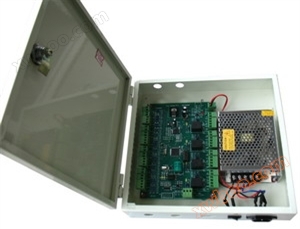
Application scheme of IC card access control system in office buildings
Application scheme of IC card access control system in office buildings
Product details

In the city, an ordinary office building may have dozens or even hundreds of companies stationed for work, and there are many and diverse personnel coming and going, which poses a serious challenge to traditional personnel entry and exit safety management. The common traditional method is for the staff in the reception room to register and release the incoming and outgoing personnel, which is time-consuming, labor-intensive, and prone to errors.
electronAccess Control SystemThis has brought a convenient and concise means to this series of work. The electronic access control system works using a personal identification card, issuing a personal identification card to every person or visitor who has the right to enter, which is equivalent to a key. The system determines whether the cardholder can enter based on the card number, the number of times the card is available, and the current time information. If so, the door will automatically open, otherwise it will not open. For places that require attendance, the access control system can also record whether each employee arrives and leaves work on time. Another advantage of the access control system is that it can add or remove a card at any time without worrying about any losses if a card is lost.
Basic components of access control system
Access Control SystemComposed of a card reader, controller, electromagnetic lock, identification card, and computer.
Identification card
It can be divided into two types: contact and non-contact. Among non-contact cards, there are multiple types such as EM cards, MIFARE cards, TEMIC cards, etc. Nowadays, EM cards are mostly used in office buildings in China, while MIFARE and TEMIC cards are also used.
card reader
According to the different types of cards, there are also various types of card readers. In some advanced and confidential entrances and exits, using fingerprint and handheld devices as terminal recognition devices is the future development trend.
door lock
Electromagnetic locks can be divided into several types according to different application scenarios, such as electric plug locks, magnetic locks, cathode locks, etc.
controller
The core of the controller access control system consists of a microprocessor and corresponding peripheral circuits. If the card reader is compared to the eyes of the system and the electromagnetic lock is compared to the hands of the system, then the controller is the brain of the system, which determines whether a certain card is a registered valid card of the system, whether the card meets the specified time period, and thus controls whether the electromagnetic lock is opened.
Analysis of Engineering Application Examples
Product selection
In the access control system project of a certain office building, we chose Xingbang access control system as the brain of the access control system. Xingbang's M-series controller fully considers the security, stability, convenience, and scalability of the controller itself. The controller itself has multiple protection measures such as lightning protection, high-voltage impact protection, and surge absorption. The communication adopts photoelectric isolation technology to minimize interference and intrusion from transmission lines. It has multiple input and output ports, which can be easily matched with other systems in the building. It can connect to various types of card readers, support multiple different entry and exit methods and multiple time periods, multiple permission groups, and communication supports RS232, RS485, TCP/IP, etc. It is suitable for applications of all sizes. Support online real-time monitoring and offline operation, equipped with backup battery, capable of power-off operation and data protection. In terms of software, the classic WIDOWS interface is simple and easy to use, with different browsing permissions. It can be applied on multiple operating systems such as WIDOWS 98, WIDOWS 2000, NT, etc., integrating access control and attendance; You just need to easily move your mouse to complete the management mode you want.
The software has three versions: standalone version, web-based version, and server management mode, suitable for various user needs. The office building engineering architecture has a total of 256 access control points in the office building, and three different management modes of the access control system have been adopted in the specific engineering design:
Single machine version management mode
Each access control point is independent of each other and does not require any connection relationship. In this case, we have adopted a standalone mode. This mode does not mean that each computer can only control one controller, but only that each computer connected to a controller has an independent database and management mode. In fact, each computer can connect at least 64 controllers and manage 512 one-way doors. Xingbang M series products have multiple models such as M1, M2, M4, and all models can share a set of software.
In terms of access modes, we have set different access methods. For example, in important places such as computer rooms and warehouses, password+card or dual card access modes can be set. In places where the number of people needs to be counted, two-way access mode can be set. In general places, one-way access mode can be set. For any access control point, we have set different access time periods and attendance time periods according to the needs of different companies. The computer automatically completes your access management and attendance statistics. All access points can be linked to devices such as fire alarms, surveillance, and can also be linked to image recognition systems.
Server management mode
The biggest difference between server management mode and standalone management mode is that it uses servers for centralized management. All controllers are connected to the server, and the settings and data downloads of all access points are completed by administrators. Each sub station can be operated through WEB, and their permissions are also assigned by administrators. For example, general access points can only browse the card swiping situation of department personnel and complete the attendance statistics of department personnel and upload them to the server, while some departments are different, such as the security department. In addition to browsing and completing the attendance of department personnel, it can also set up and remove defenses, and issue temporary cards.
Server+standalone management mode
The office building has an intranet, but the controllers need to be connected to different computers. In this case, we adopt management mode three: server+standalone version. Specifically, the server has server version software and database, which can realize most of the access control and attendance functions such as card authorization, allocation, and time period setting. Each substation also has its own software and database, which has certain management permissions, such as setting the entry and exit time and group of personnel in the department, setting alarms, etc. It completes the attendance of the department and has certain modification rights as needed. Each substation downloads the data of the controller connected to its own PC and generates various reports to transmit to the server. The server conducts comprehensive evaluation based on the reports from each substation.
Problems encountered during installation and debugging
No matter how perfect the system is, it ultimately requires people to complete it. Therefore, in order to maximize the functionality of the access control system and reduce human errors, we should pay special attention to the following aspects during installation and debugging:
Anti electromagnetic interference
Special attention should be paid to preventing electromagnetic interference, especially from lighting switches, electric typewriters, and computers, when dealing with card readers and door opening buttons. If conditions permit, the installation position of the card reader should be at least 30cm away from the strong electrical power source.
Prevent attenuation of transmission signals
The installation of the controller should take into account the distance between the controller and the card reader, and the ideal transmission distance is within 50m. For signal transmission cables, cable shielding and signal attenuation caused by long-distance transmission must be considered. During pipeline construction, steel conduits and cable trays should be used, and reliable grounding should be ensured.
Debugging of controllers and system software
System debugging is a crucial step in ensuring the quality of access control systems. The key lies in the debugging of the controller and the operation of the system software, both of which must be carried out simultaneously by the manufacturer.
Online inquiry
-
Contacts
-
Company
-
Telephone
-
Email
-
WeChat
-
Verification Code
-
Message Content
-