
VIP member
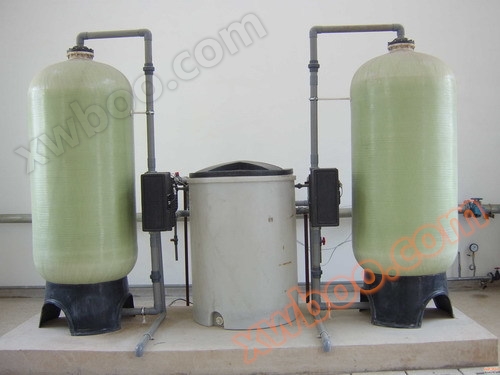
Boiler softened water treatment equipment
Product Introduction: Our company produces different models of boiler softening water equipment, which mainly softens water with higher hardness, so t
Product details

Product Introduction
The different models of boiler softening water equipment produced by our company mainly soften water with high hardness, so that the product water does not contain components such as calcium ions and magnesium ions that form hardness, meeting the standards of softened water. It has a wide range of application fields, mainly used in boilers in various industries of industry, including the use of water for hot water boilers, steam boilers, and so on.
This set of equipment is designed specifically for softened water used in boilers, with a design scheme of one in use and one backup to ensure timely water use. The purpose of using softened water for boilers is to prevent the formation of scale during the water boiling process from damaging the boiler.
Working Principle:
When raw water containing hardness ions passes through the sodium type resin in the exchange tank, calcium ions and magnesium ions in the water are exchanged and adsorbed by the sodium ions in the resin. Removing calcium ions and magnesium ions to remove carbonate or non carbonate hardness is called softened water. After the resin adsorbs a certain amount of calcium and magnesium ions, regeneration must be carried out. Regeneration is to rinse the resin layer with salt water in the salt tank. The sodium ions in the salt water replace the hardness ions on the resin into water, which is discharged from the tank with the regeneration solution to restore the resin exchange capacity and continue to soften and produce water.
Workflow:
There are five processes: work (water production), backwashing, salt absorption (regeneration), slow flushing (water injection), and fast flushing. All processes of different softening water equipment are very similar, but additional processes may be required due to differences in actual processes or controls.
Advantages:
This set of softened water equipment adopts the form of one in use and one as backup, with one resin tank in operation and the other as backup to prevent insufficient water supply caused by resin failure. Greatly improving work efficiency, this equipment is relatively easy to operate and has strong usability. It is used in many hotels, boiler rooms, steam boiler water, bathing, laundry rooms, and so on.
The hardness ions in water are mainly calcium ions and magnesium ions. These two ion components are prone to form some scale with the increase of temperature during the boiling process of water, which will gradually clog or damage the equipment over time, which is very detrimental to the equipment used. Therefore, the method of resin softening is adopted to remove hardness ions from the water, soften the water quality, and prevent scaling during the boiling process, effectively protecting the boilers and other equipment used.
Online inquiry
-
Contacts
-
Company
-
Telephone
-
Email
-
WeChat
-
Verification Code
-
Message Content
-