
VIP member
Henan Forklift
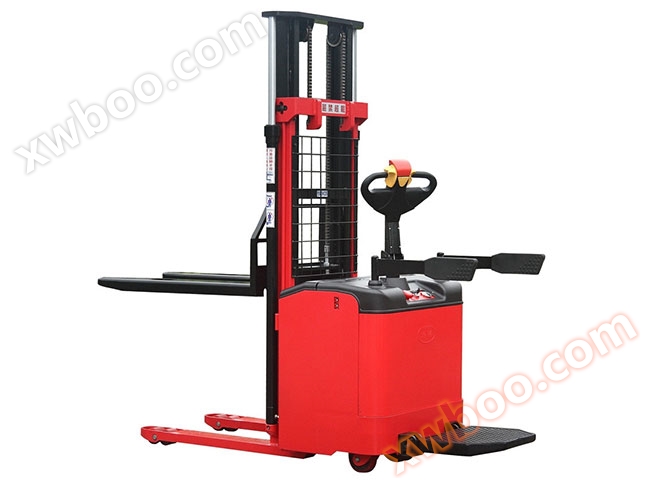
The fully electric self-propelled series forklift (with guardrail) is a high-quality brand product of "Hongfu". The drive/electric control/handle are
Product details
Compliant with the latest European and American safety system standards, multiple safety devices such as buffering, pressure regulating valves, anti-collision rebound, and emergency stop switches ensure the safety of people and vehicles.
Design with a people-oriented approach, flexible operation, comfort, and strong power.
The lifting and walking are both driven by DC power, and the descent is divided into two control modes: no-load rapid descent and full load slow descent.
Foldable guardrails ensure personal safety during walking and turning.
Compact and precise frame, small turning radius, can effectively and safely operate in narrow working spaces.
Clean, environmentally friendly, noise free, and durable.
|
Vehicle model Model
|
unit Unit
|
C1016h
|
C1025h
|
C1030h
|
C1035h
|
C1516h
|
C1525h
|
C1530h
|
C1535h
|
|
Rated lifting capacity Q
|
kgs
|
1000
|
1000
|
1000
|
1000
|
1500
|
1500
|
1500
|
1500
|
|
Rated load capacity
|
|||||||||
|
Load center C
|
mm
|
550
|
550
|
550
|
550
|
550
|
550
|
550
|
550
|
|
Load center
|
|||||||||
|
Power form
|
Traction type battery
|
||||||||
|
Power
|
|||||||||
|
Manipulation method
|
Stand up driving (with pedalsWith guardrails)
|
||||||||
|
Manipulation
|
|||||||||
|
Standard maximum lifting height H
|
mm
|
1600
|
2500
|
3000
|
3500
|
1600
|
2500
|
3000
|
3500
|
|
Std. type max lifting height
|
|||||||||
|
Door frame standard lifting height series
|
mm
|
1600/2500/3000/3500
|
|||||||
|
Mast assembly std. lifting height
|
|||||||||
|
Minimum height of fork h
|
mm
|
85
|
85
|
85
|
85
|
85
|
85
|
85
|
85
|
|
Fork min.height
|
|||||||||
|
Turning radius R
|
mm
|
1560
|
1560
|
1560
|
1560
|
1560
|
1560
|
1560
|
1560
|
|
Turning radius
|
|||||||||
|
Front overhang E
|
mm
|
420
|
420
|
420
|
420
|
420
|
420
|
420
|
420
|
|
Fork length
|
|||||||||
|
Track width D
|
mm
|
1365
|
1365
|
1365
|
1365
|
1365
|
1365
|
1365
|
1365
|
|
Wheelbase
|
|||||||||
|
overall length L
|
mm
|
2005
|
2005
|
2005
|
2005
|
2005
|
2005
|
2005
|
2005
|
|
Overall length
|
|||||||||
|
Overall width of the vehicle body B
|
mm
|
830
|
830
|
830
|
830
|
830
|
830
|
830
|
830
|
|
Overall width
|
|||||||||
|
Overall height of the vehicle body H2
|
mm
|
2080
|
1760
|
2030
|
2280
|
2080
|
1760
|
2030
|
2280
|
|
Overall height
|
|||||||||
|
Standard lifting height H1
|
mm
|
2080
|
3000
|
3550
|
4050
|
2080
|
3000
|
3550
|
4050
|
|
Std. max. lifting height
|
|||||||||
|
Standard fork size
(Length x Width x Height) |
mm
|
1100×165×60
|
|||||||
|
Standard fork
(L × W × H) |
|||||||||
|
Fork outer width B1
|
mm
|
680
|
680
|
680
|
680
|
680
|
680
|
680
|
680
|
|
Fork overall width
|
|||||||||
|
Fork width inside B2
|
mm
|
350
|
350
|
350
|
350
|
350
|
350
|
350
|
350
|
|
Fork individual width
|
|||||||||
|
Driving speed (full load/empty load)
|
km/h
|
4.8/8
|
4.8/8
|
4.8/8
|
4.8/8
|
4.8/8
|
4.8/8
|
4.8/8
|
4.8/8
|
|
Traveling speed(with/without load)
|
|||||||||
|
Increase speed (full load/empty load)
|
mm/s
|
75/108
|
75/108
|
75/108
|
75/108
|
75/108
|
75/108
|
75/108
|
75/108
|
|
Lifting speed(with/without load)
|
|||||||||
|
Descent speed (full load/empty load)
|
mm/s
|
193/116
|
193/116
|
193/116
|
193/116
|
193/116
|
193/116
|
193/116
|
193/116
|
|
Lowering speed(with/without load)
|
|||||||||
|
Climbing slope (full load/empty load)
|
%
|
5/8
|
5/8
|
5/8
|
5/8
|
5/8
|
5/8
|
5/8
|
5/8
|
|
Gradient(with/without load)
|
|||||||||
|
Braking method
|
|
Electromagnetic braking
|
Electromagnetic braking
|
Electromagnetic braking
|
Electromagnetic braking
|
Electromagnetic braking
|
Electromagnetic braking
|
Electromagnetic braking
|
Electromagnetic braking
|
|
Braking type
|
|||||||||
|
driving wheel
|
mm
|
φ250*80
|
φ250*80
|
φ250*80
|
φ250*80
|
φ250*80
|
φ250*80
|
φ250*80
|
φ250*80
|
|
Driving wheel dimmension
|
|||||||||
|
bearing wheel
|
mm
|
φ80*70
|
φ80*70
|
φ80*70
|
φ80*70
|
φ80*70
|
φ80*70
|
φ80*70
|
φ80*70
|
|
Loading wheel dimension
|
|||||||||
|
balance wheel
|
mm
|
φ125*50
|
φ125*50
|
φ125*50
|
φ125*50
|
φ125*50
|
φ125*50
|
φ125*50
|
φ125*50
|
|
Balance wheel dimension
|
|||||||||
|
Drive motor
|
kw
|
1.2
|
1.2
|
1.2
|
1.2
|
1.2
|
1.2
|
1.2
|
1.2
|
|
Driving motor
|
|||||||||
|
Lifting motor
|
kw
|
2
|
2
|
2
|
2
|
2
|
2
|
2
|
2
|
|
Lifting motor
|
|||||||||
|
Battery (voltage/capacity)
|
V/Ah
|
24V/240AH
|
24V/240AH
|
24V/240AH
|
24V/240AH
|
24V/240AH
|
24V/240AH
|
24V/240AH
|
24V/240AH
|
|
Battery(Voltage/capacity)
|
|||||||||
|
control type
|
|
stepless speed change
|
|||||||
|
Controling type
|
|||||||||
|
Standard vehicle weight
|
kg
|
826
|
902
|
949
|
996
|
876
|
952
|
999
|
1046
|
|
Standard model weight
|
|||||||||
Special specifications can be customized according to customer requirements
Safety Tip:
The above models are only for use on flat roads in the factory area. It is strictly prohibited to pull them downhill from behind, otherwise it may cause the danger of tipping over!
1.Instructions for use and operation
1.1Forward and backward:
a.Rotate the operating arm slightly downwards, release the brake device, and power on the control circuit to start using.
b.Operate the rotary knob on the handle and start moving slowly forward. As the rotation angle of the knob increases, it begins to accelerate and reaches its maximum speed when rotated to the end.
c.Rotate the rotary knob of the operating hand backwards to retract, and it also accelerates with the increase of rotation angle. Rotate it to the end to accelerate to the highest speed.
be careful! Do not change the forward or backward direction arbitrarily while driving. You must wait for the car to stop before changing.
1.2Direction control:
a.This machine controls the turning direction by turning the steering arm. Turning left means turning left, and turning right means turning right. The turning angle changes with the rotation angle of the steering arm.
b.The sum of the maximum left and right turning angles is175Degree.
be careful! When driving at high speeds, except in emergency situations, do not make sharp turns, otherwise it may cause the loaded goods or personnel to fall off the machine, resulting in injury and loss.
1.3Parking and braking
a.When the acceleration knob is returned to the neutral position, the machine loses its acceleration force and slowly stops.
b.Pushing the operating arm up or down to the bottom will generate a braking effect, and the control circuit will also stop functioning.
be careful! Do not stop or brake suddenly while driving, except in emergency situations, as it may cause the cargo to tip over.
1.4Safety device
In order to prevent the operator from being injured by the collision between the operating arm and the obstacle or wall caused by not paying attention to the obstacles or walls behind while driving backwards, there is a red safety button above the operating arm of this machine. When the button is touched while driving backwards, the machine will switch to moving forward.
The guardrail handrail above the operator's foot pedal is an optional accessory (not included as a standard model configuration) that can be selected by the manufacturer according to needs, and must be specified when purchasing and ordering.
When using the guardrail handrail, please first lift the black handle of the handrail above the horizontal position (waist position) and then gently lower it. When not in use, please raise the black handle of the armrest to a nearly vertical position and then gently lower it to near the bottom of the black fiberglass.
1.5Lifting operation
Operate the up button. The fork has been raised before. When there is no load and it needs to be lowered, press the fast down button. When the load needs to be lowered, press the slow down button to avoid sudden drop of goods, especially for handling fragile items.
1.6Charging Operation
a.Before charging, open the battery box cover to prevent hydrogen gas generated during charging from accumulating inside the battery box and causing danger.
b.Open the battery cover and check if the battery fluid in each pole is at the standard water level. If it is too low, pure water should be added.
be careful! At this time, acidic battery fluid should not be added, as the density of the battery fluid may become too high when fully charged, resulting in the inability to discharge electricity. Mineral water should not be added either, as minerals can react with sulfuric acid to produce color and reduce the battery life. It is also advisable not to add tap water as it contains many impurities that can interact with the battery fluid and affect the battery life to some extent.
c.Disconnect the safety socket between the battery and the control system, insert the safety socket on the battery end into the safety socket of the charger, press the power switch of the charger to start charging. When fully charged, the power will automatically switch on and off.
be careful! The safety socket of the charger must be plugged into the battery end, otherwise it cannot be charged.
d.Under normal charging conditions, it is necessary to8arrive10Hours, but if the battery is completely depleted, it may be necessary12It takes hours to fully charge the battery, so it is important to remember to charge it after work every day and not over discharge it, otherwise it will reduce the battery life.
be careful! When the machine is not in use for a long time, it is also necessary to use it every15Check and charge the battery once a day. If the battery is fully discharged for more than six months, it may experience deep discharge and cannot be used.
e.At least once a month, there should be balanced charging. The current for balanced charging is small, which can evenly distribute the reduced lead on the plates, thereby increasing the performance of the battery. However, it takes a long time to fully charge, so it is recommended to perform this charging on holidays.
f.After charging is complete, cover the battery cover, remove the safety socket on the battery end from the charger, and plug it into the safety socket of the control system to operate the machine.
be careful! Sparks are strictly prohibited during charging, otherwise it may cause hydrogen explosions and pose a risk of injury to personnel and damage to the battery.
2.Precautions during operation
2.1 Pay attention to the direction of travel and maintain clear visibility.
2.2 When carrying goods and blocking the forward line of sight, it should be changed to reverse driving.
2.3 When driving forward, pay attention to the position of the front fork to avoid hitting the cargo.
2.4 When the road conditions are poor, attention should be paid to avoiding bumpy obstacles while driving.
2.5 When reversing, pay attention to pedestrians and objects behind you.
2.6 When at an intersection or when the line of sight ahead is unclear, slow down.
2.7 Do not drive continuously for long periods of time on sloping roads.
2.8 When carrying fluffy goods, they should be tied up well first to avoid scattering during transportation.
2.9 When transporting goods, the center of gravity of the goods should be within the load center of the fork.
2.10 Before starting or lifting, it is necessary to confirm that the items being transported are sufficiently stable.
2.11 Overloading is absolutely prohibited.
2.12 Do not drive on rainy or waterlogged ground to prevent damage to electronic control components.
2.13 Always pay attention to whether the items being transported are placed steadily, whether they are balanced on both sides, and whether they are on the leftRight imbalance and heavy objects beyond the center of the load can easily cause deformation of the machine and affect operation
We do not guarantee any damages to personnel or equipment caused by flipping during workCompensation liability.
3.Troubleshooting of electronic control system and oil pressure system.
3.1The power distribution system of this machine is divided into two independent systems: walking and lifting. Except for the shared power supply, they are not related to each other. Therefore, the probability of simultaneous failures is very low. If both actions do not work, it can be determined that there is a problem with the battery, charger or power cord. Repeat the process and check according to the cause of the fault, look up the table to find the cause and eliminate it.
3.2The following fault cause checklist is a list of faults that have occurred in this machine or general electric vehicles before. If you still cannot find the cause according to this checklist, please contact the sales manufacturer for assistance.
3.3If the machine malfunctions, first check if the brakes are related, and then check if the battery is charged. The proportion of these two parts' problems to the machine's malfunction is90%above.
3.4After prolonged use of the machine, the brake pads will gradually wear out, increasing the brake clearance and preventing the electromagnetic coil from pulling the pads apart. At this time, the travel is not smooth or even impossible, and there is no sound of the brake jumping off when the operating handle is pressed. When this phenomenon occurs, adjust the brake clearance in real time and do not operate it before the brake is turned on, otherwise the pads will wear out quickly, and the battery coil may also experience accelerated insulation aging due to high temperature caused by friction.
The standard value for brake clearance is0.3MMBalanced adjustment is required.
3.5Adjustment and troubleshooting of brake failure to engage.
Firstly, check the gap between the suction plate and the suction coil. If greater than1MMSevere accumulation of dust on the surface can cause the inability to perform normal suction work. The processing method is as shown in the icon: completely loosen the three fixing bolts, adjust the gap limit screw, and then tighten the fixing bolts. After adjustment, the gap between the suction plate and the suction coil should be within the range of0.25-0.3MMBetween them, as shown in the icon: Three test pieces can be evenly placed for measurement, and finally the dust cover can be put back in place.
Attention: It is necessary to ensure that the gaps around are consistent in order to work properly.
Reminder: If there is serious dust accumulation between the suction plate and the suction coil during the disassembly process, it should be removed and cleaned as a whole. A small amount of cleaning agent or gasoline and diesel can be used to clean the suction surface and suction plate of the suction coil.
Attention: During the disassembly process, seven small springs and four column pins must not be lost and must be reinstalled in their original positions, otherwise it will affect the braking performance. It is forbidden to apply any oil on the brake pad suction pad.
4、 maintenance
1.Good daily maintenance can reduce wear and tear and lower operating costs.
2.The maintenance and repair work should be carried out by qualified technicians.
3.When performing maintenance or repair operations, personnel safety should be the top priority. Dangerous actions are not allowed, and laughter or noise during work should not affect the attention of the staff.
4.The workplace should comply with occupational safety requirements, be equipped with fire-fighting devices, and have good ventilation.
5.The maintenance personnel must perform each task carefully and cautiously to avoid unnecessary losses and injuries caused by negligence.
6.Battery maintenance is the most important aspect of maintenance work, as the lifespan of the battery is related to long-term usage costs. Poor maintenance can reduce the lifespan of the battery and increase usage costs, while the opposite can minimize costs. Therefore, the maintenance of the battery should be carried out with special caution, preferably with a dedicated person in charge. The key points of maintenance are detailed as follows:
1Check if the battery terminals are damaged or loose, and apply butter to prevent oxidation.
2.The battery fluid should be maintained above the electrode plate15to20mmThe optimal solution should be based on the liquid level indicator line on the outside of the battery. If it is reduced, pure water should be added instead of acidic battery fluid or mineral water.
3.Never let the battery fluid fall below the electrode plate, otherwise the exposed lead plate in the air is prone to overheating and peeling, which can reduce the battery life.
4.Adding water should not be too high, and it is best to float the battery liquid to expose the white line. Otherwise, shaking during operation and bubbles during charging can easily cause the battery liquid to overflow. In addition to corroding the machine, it can also lead to a decrease in the density of the battery liquid, resulting in insufficient storage capacity and thus reducing the service life of the battery.
be careful! Reminder: When charging, sparks are strictly prohibited near the machine, otherwise there may be a risk of hydrogen explosion.
Online inquiry
-
Contacts
-
Company
-
Telephone
-
Email
-
WeChat
-
Verification Code
-
Message Content
-