
VIP member
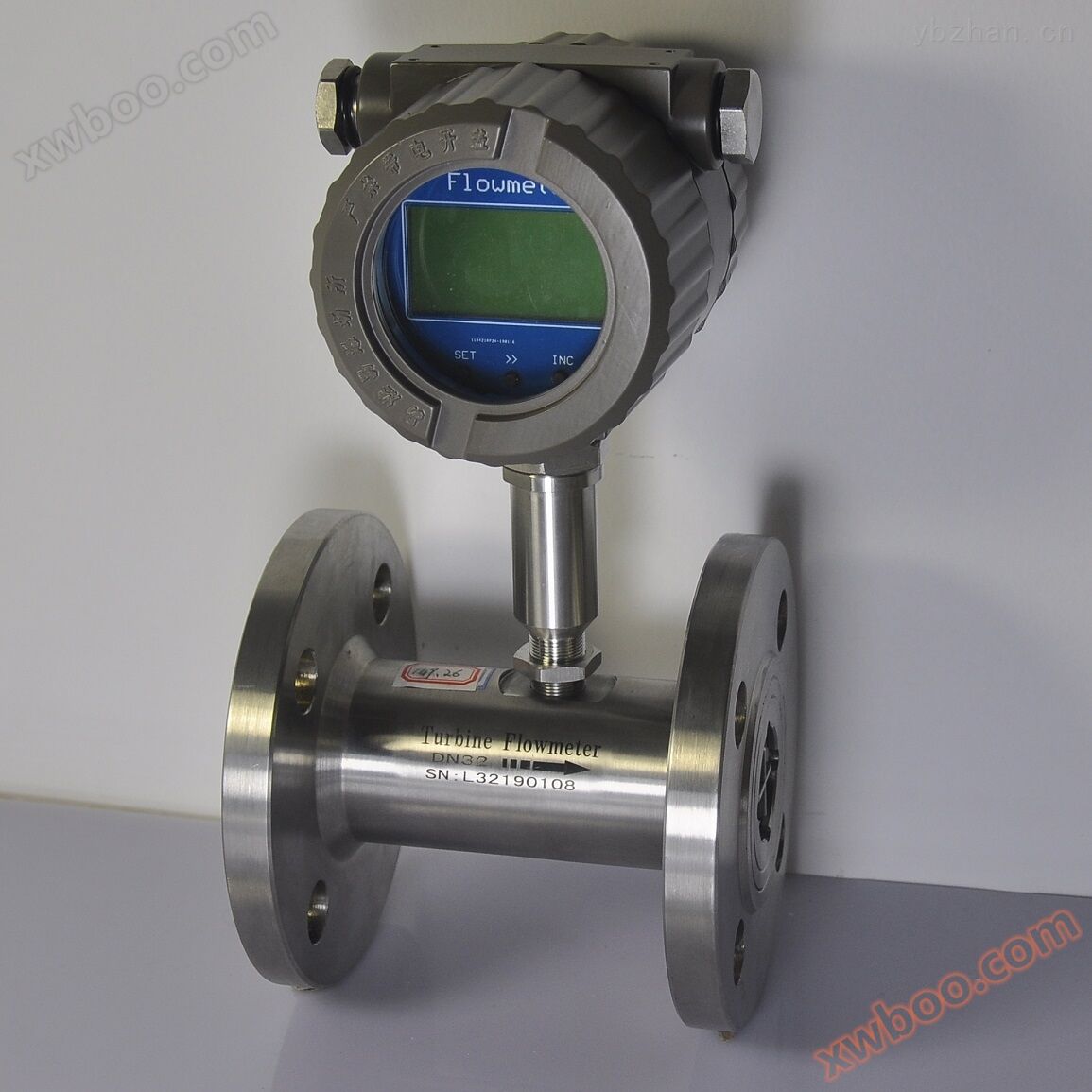
Intelligent integrated battery powered pure water flowmeter
The intelligent integrated battery powered pure water flowmeter is the main type of velocity flowmeter. It uses a multi blade rotor (turbine) to sense
Product details
Pure water flowmeter is one of the key products of Guangzhou Dechuan Instrument Co., Ltd. We recommend products that meet your requirementsPure water flowmeterWe provide comprehensive after-sales service for our pure water flowmeter products. If you have any needs or questions, please feel free to contact us,
working principle:
Intelligent integrated battery powered pure water flowmeter,It is the main type of velocity flowmeter,It adopts a multi blade rotor(turbine)Perceive the average flow velocity of the fluid,An instrument that derives flow or total volume from and is generally composed of two parts: sensors and displays,It can also be made as a whole. Turbine flowmeter is a speed type instrument with high accuracy, good repeatability, simple structure, few moving parts, high pressure resistance, wide measurement range, small volume, light weight, low pressure loss, and easy maintenance. It is used to measure the volumetric flow rate and total amount of low viscosity fluids in closed pipelines and has wide application value in industries such as petroleum, chemical, metallurgy, and urban pipeline networks.
Product Features
· Pure water flowmeter has high accuracy, generally up to ±0.5%R、 ±1.0%R
· The pure water flowmeter has good repeatability and can achieve short-term repeatability0.05% - 0.2%
· The pure water flowmeter has a compact and lightweight structure, and is easy to install and maintain
· High pressure resistance level of pure water flowmeter
· Pure water flowmeter has low pressure loss and strong flow capacity
· Pure water flowmeter has strong anti vibration performance
Technical parameters:
Instrument model |
LWGY-N |
LWGY-A |
LWGY-NExplosion proof type |
LWGY- AExplosion proof type |
LWGY-B |
LWGY- C |
|
signal output |
pulse |
4-20mA |
pulse |
perhaps4-20mA |
not have |
4-20mA/pulse |
|
power supply |
+24VDC±15% |
+24VDC±15% |
24VDC±15% |
24VDC±15% |
lithium battery |
24VDC±15% |
|
accuracy class |
1.0~0.5level |
1.0~0.5level |
1.0~0.5level |
||||
measuring range |
Standard range |
Standard range |
Standard range or extended range |
||||
monitor |
not have |
not have |
have |
||||
communication interface |
not have |
not have |
optionalRS485 |
||||
Instrument material |
stainless steel |
stainless steel |
stainless steel |
||||
Explosion proof grade |
not have |
ExdIIBT6perhapsExiaIICT4 |
ExdIIBT6perhapsExiaIICT4 |
||||
protection grade |
IP60 |
IP65 |
IP65 |
||||
Overall Power Consumption |
<1W |
<1W |
<1W |
||||
Instrument communication |
DN4~DN250 |
DN4~DN250 |
DN4~DN250 |
||||
medium temperature |
-20℃~120℃ |
-20℃~120℃ |
-20℃~120℃ |
||||
ambient temperature |
-30℃~60℃ |
-30℃~60℃ |
-30℃~60℃ |
||||
Flow range:
Instrument diameter |
Standard Range |
Extended range |
Installation method |
Conventional voltage resistance |
Specially designed pressure resistance level |
DN 4 |
0.04~0.25 |
0.04~0.4 |
Thread (flange) |
6.3 |
12、16、25 |
DN 6 |
0.1~0.6 |
0.06~0.6 |
Thread (flange) |
6.3 |
12、16、25 |
DN 10 |
0.2~1.2 |
0.15~1.5 |
Thread (flange) |
6.3 |
12、16、25 |
DN 15 |
0.6~6 |
0.4~8 |
Thread (flange) |
6.3、2.5(Flange) |
4.0、6.3、12、16、25 |
DN 20 |
0.8~8 |
0.45~9 |
Thread (flange) |
6.3、2.5(Flange) |
4.0、6.3、12、16、25 |
DN 25 |
1~10 |
0.5~10 |
Thread (flange) |
6.3、2.5(Flange) |
4.0、6.3、12、16、25 |
DN 32 |
1.5~15 |
0.8~15 |
Flange (thread) |
6.3、2.5(Flange) |
4.0、6.3、12、16、25 |
DN 40 |
2~20 |
1~20 |
Flange (thread) |
6.3、2.5(Flange) |
4.0、6.3、12、16、25 |
DN 50 |
4~40 |
2~40 |
Flange (thread) |
2.5 |
4.0、6.3、12、16、25 |
DN 65 |
7~70 |
4~70 |
flange |
2.5 |
4.0、6.3、12、16、25 |
DN 80 |
10~100 |
5~100 |
flange |
2.5 |
4.0、6.3、12、16、25 |
DN 100 |
20~200 |
10~200 |
flange |
1.6 |
4.0、6.3、12、16、25 |
DN 125 |
25~250 |
13~250 |
flange |
1.6 |
2.5、4.0、6.3、12、16 |
DN 150 |
30~300 |
15~300 |
flange |
1.6 |
2.5、4.0、6.3、12、16 |
DN 200 |
80~800 |
40~800 |
flange |
1.6 |
2.5、4.0、6.3、12、16 |
Pure water:
Pure water, also known as purified water or deionized water, refers to water that meets the hygiene standards for drinking water and is sealed in a container using methods such as electrodialysis, ion exchange, reverse osmosis, distillation, and other appropriate processing methods. It does not contain any additives, is colorless and transparent, and can be consumed directly. It is also known as purified water (in chemistry) and is commonly used in experiments. It is also called distilled water because it is made by distillation and other methods. The space water and distilled water sold in the market are all pure water; But it's better to drink less pure water because it doesn't contain too many minerals that the human body needs. Pure water is not easily conductive and is an insulator. When replenishing lead-acid batteries, pure water should be used.
Related standards:
At present, in the bottled drinking water market in China, there are mainly purified water, mineral water, spring water, and natural water
purified water
Mineral water and other substances are limited by resources such as mineral water and spring water, while purified water is produced through a certain production process using tap water. Therefore, the majority of people in the market still drink purified water, and the quality of purified water is closely related to people's lives. For this reason, the National Bureau of Quality and Technical Supervision1998year4Monthly releaseGB173233-1998Bottled Drinking Purified WaterGB17324-1998Sanitary standards for bottled purified drinking water. In these two standards, there are sensory indicators included4Item, physical and chemical indicators4Item, hygiene indicators11Item.
Sensory indicators
Sensory indicators include chromaticity, turbidity, odor, and visible substances to the naked eye. These indicators are the basic indicators in the quality control of purified water, and their standard values are based on the standards of drinking water (i.e. tap water). Currently, most manufacturers produce purified water from tap water, which undergoes a process of coarse filtration, fine filtration, and deionized purification. Therefore, generally, purified water can meet the values required by national standards.
Physical and chemical indicators
The most important physical and chemical indicators are conductivity and potassium permanganate consumption. Conductivity is a characteristic indicator of pure water, reflecting the purity level of pure water and the quality of production process control. Due to the fact that drinking water does not undergo deionized purification, this indicator is not considered. For pure water, "purity" is its basic requirement, as high levels of metal elements and microorganisms can lead to high electrical conductivity. So, water with lower conductivity is purer.
Potassium permanganate consumption refers to1LThe milligrams of oxygen consumed by reducing substances in water when oxidized by potassium permanganate under certain conditions mainly examine the content of organic matter, especially chlorides, in the water.GB17323-1998According to the "Bottled Drinking Purified Water" regulations, the consumption of potassium permanganate in drinking purified water is (based on)O2The calculation shall not exceed1.0mg/LIf the consumption of potassium permanganate is too high, it is possible that there are excessive microorganisms in the water, or some manufacturers may increase disinfectants to prevent excessive microorganismsClO2As a result, some new organic halogenated compounds are generated, and in this case, free chlorine generally exceeds the standard.
Health indicators
Health indicators include several categories such as metal elements, organic matter, and microorganisms.
Metal indicators
The metal element index specifies the content of lead, arsenic, and copper in the standard, and the requirements for lead and arsenic shall not exceed0.1mg/LIt mainly comes from the environment affected by human activities, including soil, river pollution, and so on. Lead and arsenic are toxic and harmful elements. Lead can enter the human body through the respiratory or digestive tract and accumulate in the body. When the lead content in the blood is0.6~0.8mg/LAt this time, it will damage the internal organs, and arsenic compounds can cause poisoning. Therefore, their content should be as small as possible, while copper is specified in the standard not to exceed1.0mg/LAlthough copper is not a harmful element, it is not a substance where more is better. For pure water, it is also one of the indicators to measure its purity.
Another important indicator in the national health standards is the nitrite content. Nitrite mainly comes from nitrate in the soil near the water source, with higher nitrate content in saline alkali land, heavily applied nitrate fertilizers, and molybdenum deficient soil. According to the national standard, nitrite should not exceed0.002mg/L.
Intelligent integrated battery powered pure water flowmeterLink,Guangzhou Dichuan Instrument Co., LtdPure water flow meter,2020
Online inquiry
-
Contacts
-
Company
-
Telephone
-
Email
-
WeChat
-
Verification Code
-
Message Content
-