
VIP member

Product details

In the field of on-site applications such as quality control, material classification, alloy identification, safety prevention, and accident investigation, alloy grade identification and rapid analysis of metal composition are severe challenges for laboratory analysis. Now, all of this has changed. Thermo Fisher Scientific's Niton handheld XRF technology: fast analysis results, significant reduction in expensive analysis costs, and quick decision-making of major decisions can all be easily achieved at the moment of pulling the trigger of the Niton XRF analyzer.
Application Fields◆ Scrap metal recycling ◆ PMI identification ◆ Production and manufacturing QA/QC control ◆ Fluid accelerated corrosion ◆ Precious metal analysis
◆ Excellent performance
High precision, can intuitively display alloy grades and element percentage content (some elements can be displayed to three decimal places) as well as ppm content
◆ Fast speed and easy operation
The entire analysis process of "boot up - aiming test - viewing results" can be completed in just a few seconds, and alloy grade identification only takes 1-2 seconds. The operation is simple, and even non-technical personnel can easily master it
◆ Special structure
Adopting tough LEXIAN Plastic sealed shell, lightweight, sturdy and durable; Sealed integrated design, dustproof, waterproof, corrosion-resistant, can be safely used anywhere
◆ Strong antiviral ability
Built in integrated dedicated operating system, no need for external PDA, fast computing speed, with virus immunity function
◆ Non destructive testing
Unlike destructive testing methods, the sample remained undamaged throughout the entire testing process
◆ Optimize applications
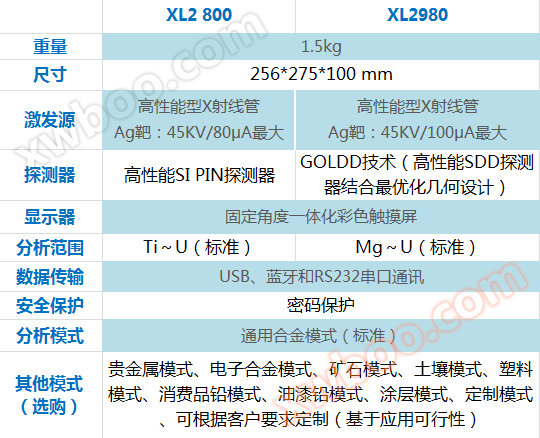
High performance X-ray detector options can provide more professional and targeted solutions for alloy analysis applications for different users
Advanced NDT software
Niton's proprietary data management software allows you to easily set user login passwords, generate customized reports, print personalized analysis certificates with company logos, and achieve remote control of instruments; Users can edit the alloy grade library and add alloy grades; Automatic calibration and diagnosis of instrument malfunctions; Software upgrade can be achieved through the Internet
◆ Flexible communication function
There are various instrument connection methods such as Bluetooth, USB, and RS-232, and the communication methods are very flexible. Uploading and downloading data, editing and outputting PMI reports are very convenient

Online inquiry
-
Contacts
-
Company
-
Telephone
-
Email
-
WeChat
-
Verification Code
-
Message Content
-