
VIP member
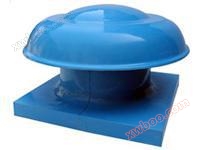
Roof fiberglass fan
Description: There are two types of fans: single exhaust and reversible (exhaust and intake). If a reversible fan is required, it must be specified wh
Product details
Roof fiberglass fanThe models are divided into:
NO3、 4. There are a total of 17 machine numbers, including 5, 6, 7, 8, 9, 10, 11.2, 12.5, 14, 16, 18, 20, 24, 28, and 32.
The transmission forms are divided into A-type (direct motor connection), C-type (belt transmission), and gearbox rotation.
Roof fiberglass fans are divided into:
There are two types: single exhaust and reversible (exhaust and intake). If a reversible fan is required, it must be specified when ordering. The air volume and pressure efficiency of reversible fans will decrease by about 10% -15%. The structure of the roof fiberglass fan consists of components such as impeller, air duct, mushroom shaped wind cap, loose leaf air door, electric motor, transmission group, safety net, bird proof net, etc.
Performance of roof fiberglass fan:
(1) The impeller adopts high-strength aluminum alloy blades, which have excellent aerodynamic performance and anti-corrosion performance.
(2) The air duct is made of fiberglass material and has excellent anti-corrosion performance.
(3) The mushroom shaped air door can automatically open, and when the fan stops running, the air door closes to reduce the loss of indoor heat in winter.
(4) The motor leads out to the safety switch outside the casing for easy wiring by the user.
Operating conditions for roof fiberglass fan:
The working medium of this fan during operation is industrial atmosphere, with a medium temperature of less than or equal to 70 degrees. When the temperature of the medium is 25 degrees, the relative temperature should not exceed 95%, and the dust content (including solid impurities) of the medium should not exceed 100 milligrams per cubic meter. If the operating conditions of the fan exceed the above specifications, special design should be proposed at the time of ordering.
The performance of the roof fiberglass fan refers to the air performance under standard conditions (temperature of 20 degrees) with relative turbidity of 50% during the National Day holiday, atmospheric pressure of 101325Pa less than 760 mmHg, and gas density of 1.2 kg/cubic meter. If the ventilation fan operates under non-standard conditions, its performance needs to be converted through corresponding formulas.
The strength design of the roof fiberglass fan is based on the following indicators: the fan can be used normally under the condition of wind speed less than or equal to 25m/s, and the fan will not break the field under the condition of extreme wind speed V=32m/s.
Installation, use, and maintenance of large roof fans:
1. Before installation, a detailed inspection of all components and connecting parts of the fan should be carried out to see if there is any damage or looseness. If there is any, it should be replaced or corrected in a timely manner. Special attention should be paid to whether the impeller is damaged and polished, whether the gap between the blades and the air duct is uniform, and whether the direction of rotation of the impeller is correct.
2. The installation foundation surface must be flat and raised 100-200 millimeters above the roof to prevent water seepage and leakage. And the connecting bolts must be buried properly.
3. After installation, conduct a trial run. Before transportation, check whether the blade installation angle and motor power match the data specified on the product nameplate. If it does not meet the requirements, it should be stopped immediately to prevent the motor from burning out.
4. During use, regular attention should be paid to whether the operation is normal, and timely maintenance should be carried out. After a period of use, it should be cleaned, dust-proof, and lubricated with oil through each oil injection hole.
5. Check the fastening nuts to ensure tightness and prevent loosening.
6. In case of heavy snow and freezing in winter, it is necessary to frequently operate the fan to prevent heavy snow from blocking the fan outlet.
Roof fiberglass fanWidely used for:
Ventilation and air exchange in civil buildings such as office buildings, sports venues, hotels, restaurants, industrial and mining enterprises, workshops, warehouses, laboratories, etc. can also be connected in series or parallel between pipelines to increase pressure, flow rate, exhaust and supply.

Online inquiry
-
Contacts
-
Company
-
Telephone
-
Email
-
WeChat
-
Verification Code
-
Message Content
-