
VIP member
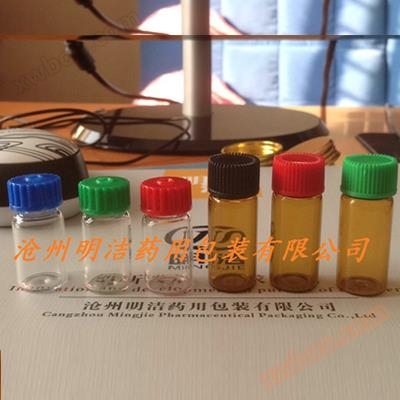
Small capacity reagent bottle
5ml reagent bottle, chemical reagent bottle, colorless and brown; Wide mouth, narrow mouth; There are various types such as ground mouth and no ground
Product details
Glass reagent bottles, chemical reagent bottles, available in colorless and brown colors; Wide mouth, narrow mouth; There are various types such as ground mouth and no ground mouth.
Wide mouthed bottles are used to hold solid reagents, while narrow mouthed bottles are used to hold liquid reagents; Brown bottles are used for light shielded reagents, and ground mouthed stoppered bottles can prevent reagent moisture absorption and concentration changes. The reagent bottle is not heat-resistant. A dropper with a ground mouth dropper is called a dropper. Bottles used to hold chemical reagents are divided into glass and plastic according to material, wide mouthed bottles and fine mouthed bottles according to size, and solid and liquid reagent bottles according to the substance they contain. Wide mouthed bottles hold solids, while fine mouthed bottles hold liquids. The interior of the bottle mouth is designed with a frosted finish to maintain sealing and prevent reagent leakage. The vast majority of laboratories in the world use reagent bottles produced by German companies because their lids are made of blue plastic material, also known as blue cap reagent bottles.
The reagent bottles include high borosilicate glass small mouth bottles and glass wide mouth bottles, leak proof small mouth reagent bottles, leak proof wide mouth reagent bottles, and square reagent bottles.
Produced using PP material, with good chemical resistance and no biological toxicity; Suitable for storage, transportation, and containment of liquids and powders.
Leak proof reagent bottles, specifications: 5ml, 10ml, 15ml, 30ml, 65ml, 125ml, 250ml, 500ml, 1000ml; Ordinary reagent bottles, specifications: 50ml, 100ml, 250ml, 500ml, 1000ml, 2000ml; Reagent bottles with specifications: 30ml, 60ml, 100ml, 250ml, 500ml, 1000ml.
The PTFE reagent bottle has excellent chemical stability and will not undergo chemical reactions even when in long-term contact with strong acids, concentrated bases, and strong oxidants at high temperatures. It is one of the best performing materials in the world today. The PTFE sampling bottle has a wide range of operating temperatures and can be used for a long time at -180 ℃ to 260 ℃ without affecting its performance.
Online inquiry
-
Contacts
-
Company
-
Telephone
-
Email
-
WeChat
-
Verification Code
-
Message Content
-