
VIP member

Stainless steel tabletop fume hood
Stainless steel desktop fume hood, also known as desktop fume hood, ventilated kitchen, floor standing fume hood, etc
Product details
Stainless steel desktop fume hood, also known as desktop fume hood, ventilated kitchen, floor standing fume hood, etc.
What is a desktop fume hood? Desktop fume hood is a commonly used local exhaust equipment in laboratories. Due to its different structures and usage conditions, the exhaust system is also different. The performance of a fume hood is related to the air flow rate inside the hood. Its main function is to protect experimental personnel from contamination by harmful substances. Stainless steel desktop fume hood and ventilation kitchen configuration instructions:
Common characteristics:
1. External dimensions, standard type: HL1200/1500/1800 * 850 * 2350mm.
2. Tabletop options:
a: 12.7mm solid core physical and chemical board, resistant to high temperatures of 130 ℃, acid and alkali, and various organic solvents, wear-resistant, anti-static, non-toxic, and non radiative.
b: 15mm epoxy resin board, resistant to high temperature of 600 ℃, strong acid and alkali, and various organic solvents, anti-static, non-toxic, and radiation free.
c: 20 ㎜ ceramic table top, resistant to 1200 ℃ high temperature, not afraid of open fire, resistant to various strong acids, alkalis and organic solvents, hard, scratch resistant, strong impact resistance, ultraviolet radiation resistance, anti-aging, non-toxic, radiation free, extremely long service life!
3. There are two types: upper and lower seat split and connected unit type, and multi-element type.
4. The inner side of the guide plate is made of 5mm anti double special plate and three-stage air guide, which can handle any dead corners inside the cabinet (special lining can be customized with stainless steel, physical and chemical plates, or ceramic plates, etc.).
5. Adopting a touch sensitive and intelligent switch, it is multifunctional and aesthetically pleasing.
6. Lighting: 30W purification lamp hidden under the top plate, with a luminosity of ≥ 300LUX.
7. Water spout: It can be transformed into a desktop single mouth faucet, with a surface treated with epoxy resin electrostatic spraying and high-temperature treatment. It is an imported ceramic core valve and wear-resistant.
8. Sink: Made of PP sink, integrated by mold, acid and alkali resistant.
9. Socket: European universal plug with cover, compact and beautiful.
10. Window: Made of 5mm float glass tempered glass, explosion-proof, the frame is connected by aluminum alloy profiles that have been treated with high-temperature epoxy resin electrostatic spraying on the surface. It is wear-resistant, lightweight, and effectively solves the problem of traditional jamming, allowing it to stay freely.
11. The glass groove is a one-time formed aluminum alloy groove, with wear-resistant bristles embedded on three sides, which can push the glass up and down smoothly without noise.
The opening height of the window is 200mm ≤ H ≤ 750mm.
13. According to customer requirements, air nozzles and rack nets can be installed inside the fume hood.
14. The inner maintenance door is sealed with industrial PPR strips and resistant to acid and alkali.
15. The heavy hammer design is ingenious, with a hidden track type, simple, and lightweight, avoiding the traditional rear hanging style and solving the troubles during maintenance.
16. The control electrical box is installed in the lower cabinet for easy maintenance.
17. The lower cabinet has the purpose of storing various drugs and reagents.
18. Sterilization lamps and electric air valves, non standard products. Table type fume hood and ventilated kitchen material specifications:
1. All steel fume hood
Framework: The cabinet is made of 1.2mm thick cold-rolled steel plate;
After acid washing and phosphating treatment, the steel components are sprayed with epoxy resin powder on the surface,
High temperature curing treatment can resist acid and alkali corrosion.
2. Fiberglass fume hood
The cabinet is made of polymer composite materials and integrated into a mold,
A new product that is corrosion-resistant, waterproof, aesthetically pleasing, and highly user-friendly and environmentally friendly.
3. Steel wood ventilation cabinet
The exterior of the cabinet is made of high-quality medium fiber board, and all board sections are treated with high-quality PVC edge sealing and waterproofing. The built-in structural support is made of 30 * 60 * 1.5mm steel pipes, and the surface is treated with acid washing and phosphating, followed by electrostatic spraying of epoxy resin powder and 180 ℃ high-temperature curing treatment. Desktop fume hoods have the following characteristics:
Firstly, it has an integrated design that facilitates laboratory personnel to operate in small spaces and occupies relatively less space;
Secondly, it adopts an efficient filtration system that can effectively filter pollutants in the air and maintain the purity of the experimental environment;
Again, it has good sealing performance, which can prevent the leakage of harmful substances and ensure the safety of experimental personnel;
Finally, it also has the characteristics of easy operation, low noise, and low energy consumption.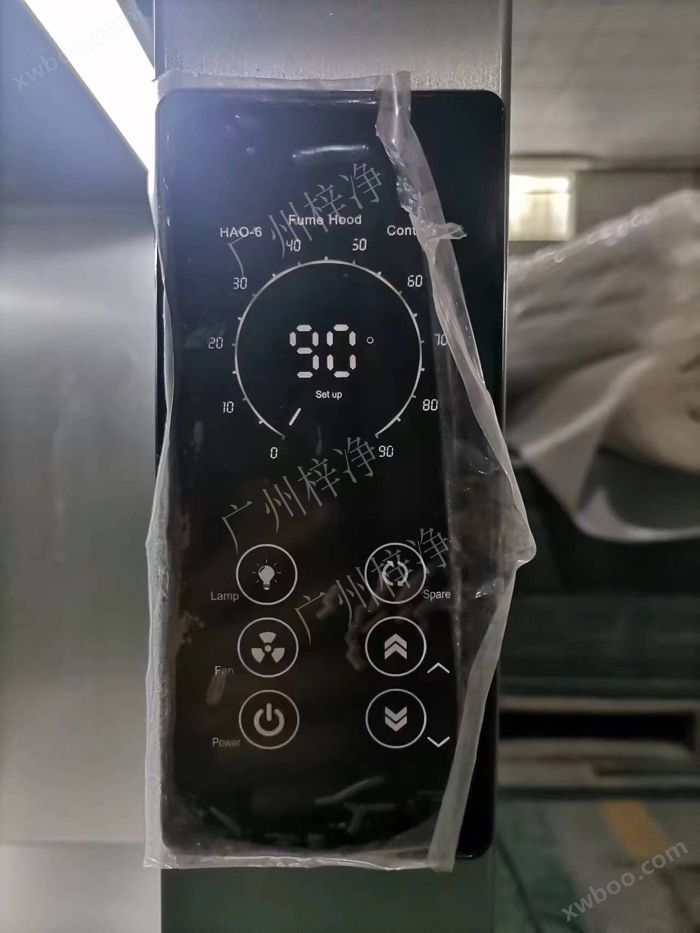 The desktop fume hood has the following main functions:
1. Protective function: It can effectively isolate experimental personnel from harmful substances, prevent them from direct contact with harmful substances, and thus protect the safety of experimental personnel;
2. Filtering function: It adopts an effective filtering system that can filter out harmful gases and particles in the air, ensuring the purity of the experimental environment;
3. Exhaust function: It can discharge harmful substances outdoors, ensure indoor air quality, and reduce the risk of laboratory pollution;
4. Dehumidification and circulation function: It can effectively dehumidify, keep the experimental environment dry, and ensure uniform temperature and humidity of the experimental environment through air circulation function.
The impact of desktop fume hoods on laboratory work: Desktop fume hoods have a significant impact on laboratory work
Firstly, it can provide a clean and sterile working environment, ensuring the accuracy and reliability of experimental results;
Secondly, it can effectively prevent the leakage and pollution of harmful substances, protecting the health and safety of experimental personnel;
Again, it reduces the risk of laboratory contamination and improves the safety of the laboratory;
Finally, it can improve the efficiency of laboratory work, enhance the comfort of laboratory personnel, and enable them to focus more on experimental research.
Specification standards for size of fume hood and fume hood:
Specification (mm) Window opening area (㎡) 0.4m/s Wind speed Airflow (m3) Static wind pressure (Pa) 0.5m/s Wind speed Airflow (m3) Static wind pressure (Pa) 0.6m/s Wind speed Airflow (m3) Static wind pressure (Pa) Working dimensions (mm)
1200 0.73 1200 37.5 1600 63 970*635*1185
1500 0.94 1380 50.2 2200 75 1250*635*1185
1800 1.17 1800 62.5 2700 99 1550*635*1185 Operation method of stainless steel desk type fume hood ventilation kitchen:
1. When working, first close the main switch inside the distribution box and check the switch to ensure it is in good condition.
2. Tap the on/off button on the control panel, and the indicator light will show a red light indicating the working state.
3. If you want the fan, socket, light, etc. to work, simply touch any corresponding button, and the indicator light will display a red light indicating the working state. Please refer to the electronic air regulating valve manual for details.
4. The working voltage of each socket is 50HZ/~220V/10A.
6. The corresponding voltage for the fan motor can be 50HZ/~220V or~380V.
7. When stopping work, the branch power should be turned off first, and then the main power in the power box should be turned off.
8. If any abnormal phenomenon is found, the main power supply in the power box should be turned off in a timely manner and technical personnel should be sought for maintenance.
9. If it is necessary to control the socket, an external AC contactor must be used.
Stainless steel tabletop fume hood and ventilated kitchen can be customized according to the design!
Recommended reading:Non standard customization of material platform
Online inquiry
-
Contacts
-
Company
-
Telephone
-
Email
-
WeChat
-
Verification Code
-
Message Content
-