

Body strain/internal strain measurement software
VIC-Volume Digital Volume Correlation (DVC) Software
The all-new Vic Volume launched by CSI Corporation ™ The software is an exciting addition to VIC's digital image related product line. Vic Volume uses volumetric images from tomography equipment such as X-rays or CT scanners to measure the internal deformation of specimens under applied loads. Vic-Volume™Analyze the acquired images to create three-dimensional volumetric displacement and strain data of the internal behavior of the specimen. The obtained data is a full field contour map of deformed data, which can be viewed, animated, and extracted for FEA validation.
The newVic-Volume™ software by Correlated Solutionsis an exciting addition to the VIC digital image correlation product line. Vic-Volume utilizes volumetric images from X-Rays or CT-Scanners to measure internal deformation of a specimen under an applied load. Vic-Volume analyzes the acquired images to create three-dimensional volumetric displacement and strain data of the specimen’s internal behavior. The resulting data is a full-field contour plot of the deformation data that can be viewed, animated, and extracted for FEA validation.

Technical BackgroundTechnology Background
Digital Image Correlation (DIC) technology is widely popular among scientists, researchers, and engineers worldwide due to its accuracy, robustness, versatility, flexibility, and overall ease of use. DICWhite light machine vision digital cameras are commonly used for two-dimensional and three-dimensional surface deformation and strain measurements. Since 1998, CSI has provided turnkey 2D and 3D DIC systems and continues to develop and add new advanced DIC products to its growing product line. Recently, CSI has developed new software that utilizes practical images from X-ray or CT scanners to measure the volume deformation (internal strain) of objects under static loads.
Digital Image Correlation (DIC) has found widespread popularity among scientists, researchers and engineers across the globe due to its accuracy, robustness, versatility, flexibility and overall ease of use. DIC is commonly used to measure 2D and 3D surface deformation and strain utilizing white light machine vision digital cameras. Correlated Solutions has offered turn-key 2D and 3D DIC systems since 1998, and continues to develop and add new advanced DIC products to our growing product line. More recently, Correlated Solutions has developed new software that utilities images from X-Rays or CT scanners to measure volumetric deformation of an object under an applied load.
Measurement settingsSetup
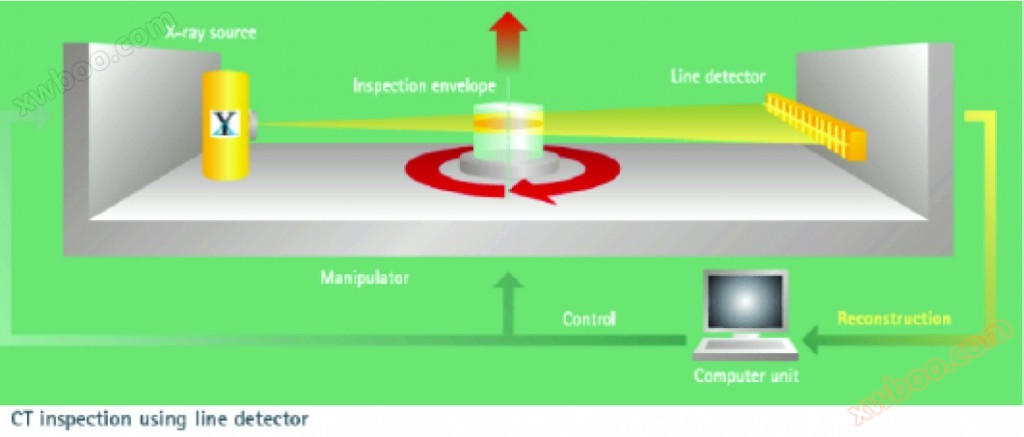
The above figure shows a typical setup for capturing images during the testing process. The tomographic scanner obtains images at specific depth coordinates, and then Vic Volume analyzes the image slices to construct a 3D volume composed of voxels. Each voxel is a building block of a sub volume, which contains volume image correlation data.
The diagram above displays a typical setup of how the images are acquired during a test. The scanner acquires images at specific depth coordinates, and then Vic-Volume analyzes the image slices to construct a 3D volume made up of voxels. The individual voxels are the building blocks for the sub-volume, which contain the volumetric image correlation data.
caseExample 1
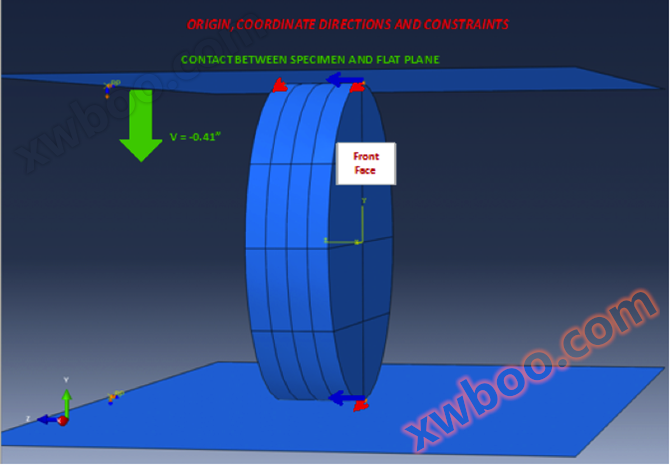
The rubber disc is installed between two clamps and a set of reference images is obtained from the CT scanner in known increments. Then analyze each 'slice' data to calculate the static volume measurement results. After the disc is subjected to compressive load, the CT scanner captures images again at the same position. The DIC algorithm is used to calculate the volume changes or deformations at each individual voxel that makes up the 3D volume.
A rubber puck is mounted between two grips, and a set of reference images are acquired from a CT scanner at know increments. Each ‘slice’ of data is then analyzed to compute a static volume measurement. After the puck undergoes a compression load, images are acquired again by the CT scanner at the same locations. Digital Image Correlation algorithms are used to calculate the volumetric change or deformation at each individual voxel, which make up the 3D volume.
The animation above shows the internal strain (Ezz) of a compressed rubber disc. Volume strain (internal strain) data can be viewed, analyzed, or extracted as volume or individual data slices. Through this technology, the internal compressive strain can be clearly observed.
The above animation displays the internal strain (Ezz) of a rubber puck undergoing compression. The volumetric strain data can be viewed, analyzed, or extracted as a volume or as individual data slices. The internal compressive strain can clearly be seen.
caseExample 2

Install the enhanced rubber matrix composite material between two handles and obtain a set of images from the CT scanner in known increments as a reference. Then analyze each 'slice' data to calculate the static volume measurement results. After the specimen is subjected to tensile load, images are obtained again at the same position using a CT scanner. Digital image correlation algorithms are used to calculate the volume changes or deformations at each individual voxel that constitutes a 3D volume.
A reinforced rubber matrix composite is mounted between two grips, and a set of reference images are acquired from a CT scanner at know increments. Each ‘slice’ of data is then analyzed to compute a static volume measurement. After the specimen undergoes a tensile load, images are acquired again by the CT scanner at the same locations. Digital Image Correlation algorithms are used to calculate the volumetric change or deformation at each individual voxel, which make up the 3D volume.
The above animation shows the internal strain (Ezz) of a reinforced rubber matrix composite material subjected to tension. Volume strain (internal strain) data can be viewed, analyzed, or extracted as volume or individual data slices. As shown in the video, the internal tension and strain can be clearly observed.
The above animation displays the internal strain (Ezz) of a reinforced rubber matrix composite undergoing tension. The volumetric strain data can be viewed, analyzed, or extracted as a volume or as individual data slices. The internal tension strain can clearly be seen.
Technical CharacteristicsVic-Volume Software Features
• AOI selection can be conveniently carried out through the "Tweening" method
• Semi automated initial prediction calculation
Optimized for accuracy, reducing non-linear optimization to minimize bias and interpolation artifacts
Highly advanced memory management allows analysis of large volume datasets and improves computational efficiency
Based on volumetric 3D displacement and strain information
• Convenient AOI selection method through “Tweening’’
• Semi-automatic initial guess computation
• Optimized for accuracy reduce non-linear optimization to reduce bias and interpolation artifacts
• Highly Advanced memory management permits analysis of huge volumetric data sets
• Volumetric 3D displacements & strains