
VIP member
Product details
Product Introduction
1、 Product Overview:
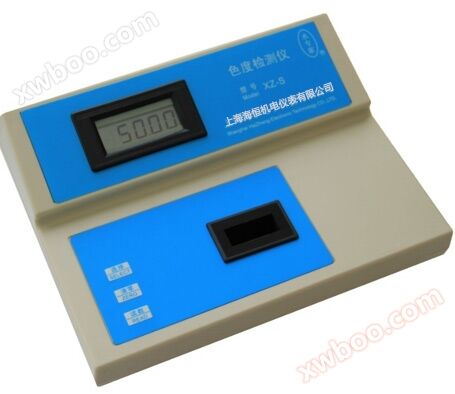
The XZ-1A-Z beer turbidity analyzer is an instrument used to measure the scattering or attenuation of light generated by insoluble particulate matter suspended in water (or transparent liquid), and can quantitatively characterize the content of these suspended particulate matter. This instrument can be widely used in water plants, food, chemical, metallurgical, environmental protection, and pharmaceutical industries, and is a commonly used laboratory instrument.
2、 Technical parameters:
Measurement range: 0-200NTU, 0-50EBC
Minimum indication: 0.01NTU
Repeatability: ≤ 2%
Accuracy: ≤ ±5%FS
Power supply voltage: AC 220V 50Hz
Optional accessories: High power battery 200 yuan/piece, aluminum alloy box 150 yuan/piece (can be carried to the site for testing after configuration)
3、 Product features:
1. Microcomputer, fully Chinese display, touch sensitive keyboard, large letter high brightness LCD display for turbidity, easy operation, and high cost-effectiveness.
2. The instrument adopts proportional scattered light measurement, which can automatically eliminate light source aging, with a resolution of up to 0.01 NTU, and can meet the requirements of unstable turbidity analysis, especially suitable for extremely low turbidity analysis.
Our company's specially designed LED light source automatic control circuit ensures stable light source and solves the problem of preheating during startup.
4. Adopting a rectangular optical glass colorimetric dish, the surface is smooth and polished, overcoming the measurement error caused by uneven thickness of the circular tube colorimetric dish wall. It has good repeatability and is more accurate at low turbidity.
5. It can automatically zero and calibrate at 5 points, with automatic and manual range switching, non-linear data processing, and data smoothing functions. The instrument can work stably for a long time.
6. The instrument stores calibration curves within the full range, with power-off protection, and calibration data will not be lost.
7. Advanced technology, in compliance with the national standard GB/T5749-2006 for drinking water hygiene.
Related knowledge | What is turbidity?
Turbidity refers to the degree of obstruction caused by a solution to light passing through, which includes the scattering of light by suspended solids and the absorption of light by solute molecules. The turbidity of water is not only related to the content of suspended substances in the water, but also to their size, shape, and refractive index.
Turbidity is usually applicable for measuring the quality of natural water, drinking water, and some industrial water. The water sample for turbidity measurement should be measured as soon as possible, or it must be refrigerated at 4 ℃ and measured within 24 hours. Before measurement, the water sample should be vigorously shaken and restored to room temperature.
Water containing suspended solids and colloids such as soil, silt, fine organic matter, inorganic matter, plankton, etc. can make the water turbid and present a certain degree of turbidity. In water quality analysis, it is stipulated that the turbidity composed of 1mg SiO2 in 1L of water is one standard turbidity unit, abbreviated as 1 degree. Usually, the higher the turbidity, the more turbid the solution.
For more information, please scan the QR code:

Online inquiry
-
Contacts
-
Company
-
Telephone
-
Email
-
WeChat
-
Verification Code
-
Message Content
-